
A structured settlement is a negotiated customized stream of periodic payments:
A structured settlement is often funded with an annuity, but unlike other deferred annuties or income annuities, a structured settlement annuity can have multiple payment streams to address multiple needs in a single contract.
A structured settlement addresses the thing that most people most worry about the most. Money.
The inevitable question “lump sum or structured settlement?” is one faced by many plaintiffs. It may come up at mediation or when the case settles. However, it is not an either/or answer because many times both a structured settlement and a lump sum is the answer.
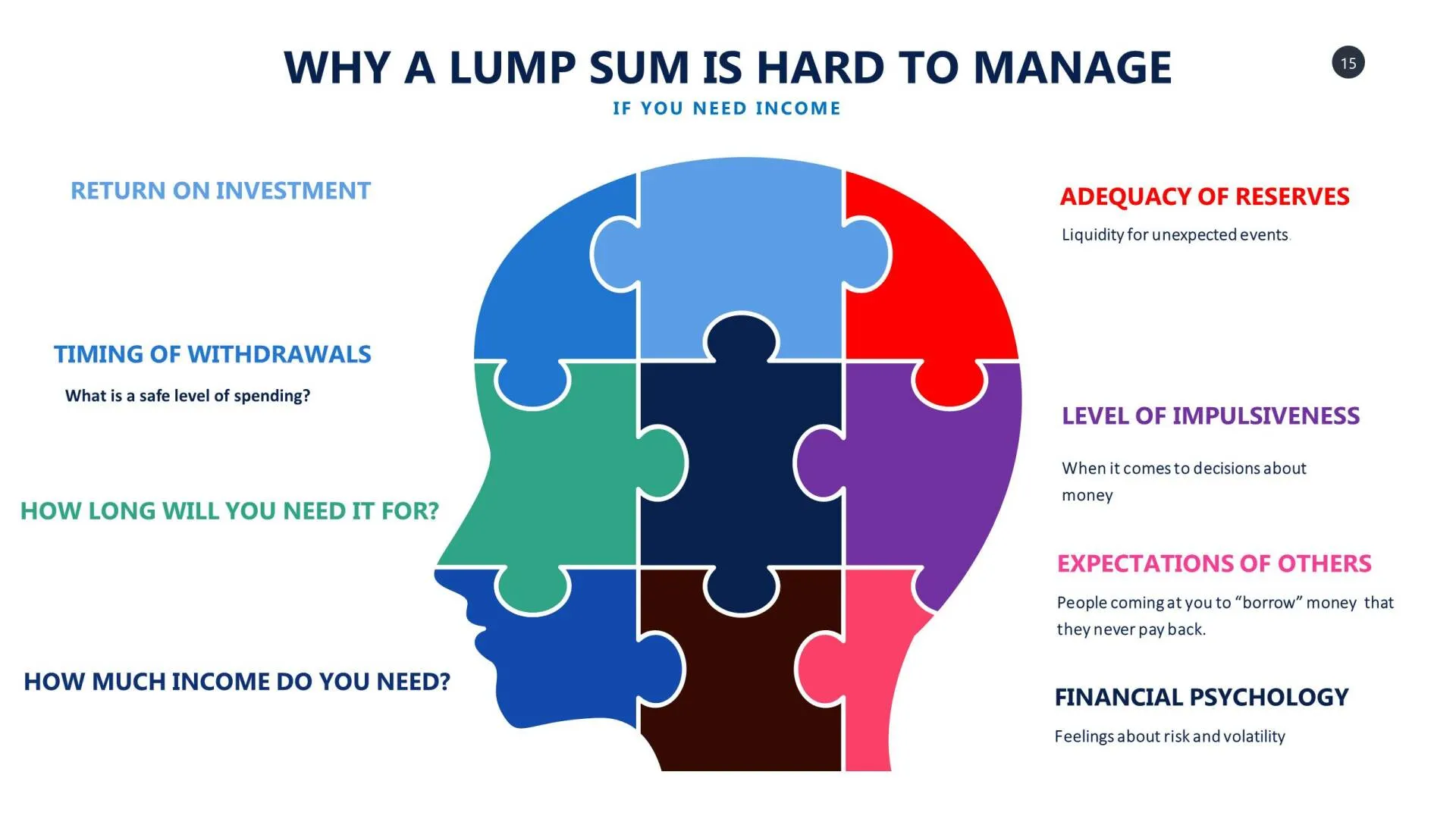
As a volatility buffer, a structured settlement is a stable pathway forward and an important core financial planning tool available to parties in personal injury, wrongful death and workers compensation litigation, that provides essential income stability with tax advantages. Protect your legal settlement recovery with a structured settlement and create or augment a stable financial core.
When the settlement of claims represent payment of damages for personal physical injury or physical sickness, wrongful death, workers compensation and the settlement is structured using a qualified funding asset (a single premium structured settlement annuity, or a trust fund that invests only in obligations of the United States government), the periodic payments are income tax-free. There are also index linked and other market based options.
(A) which is established by (1) suit or agreement for periodic payment of damages excludable from gross income of the recipient under §104(a)(2), or (ii) agreement for periodic payment of damages under any workers’ compensation law excludable from gross income of the recipient under §104(a)(1), and
(B) under which the periodic payments are (i) of the character described in subparagraphs (A) and (B) of §130(c)(2), and
(ii) payable by a person who is a party to the suit or agreement or the workers’ compensation claim or by a person who has assumed the liability for such periodic payments under a qualified assignment in accordance with §130…
Please read our section How Structured Settlements Work. Structured Settlement annuities are only placed by or in conjunction with structured settlement brokers and consultants who hold active life insurance licenses (annuities, which are issued by life insurance companies, are grouped into this category for regulatory purposes) and are authorized by the insurers that issue the structured settlement annuities. Note that even if someone markets themselves to you as a settlement planner, they are acting in the capacity as agent or broker when placing, or co-broking a structured settlement. In New York State, individuals or companies holding life broker licenses may also act as structured settlement consultants, but may not be appointed by the annuity issuer. Such brokers and consultants are generally paid a one-time commission or share of the commission, by the annuity issuer(s), or co-broker, for placing the structured settlement annuity or other funding asset. Generally, state insurance law prohibits rebating of commissions.
4structures.com® LLC hopes that you find this website helpful in learning what is a structured settlement and how a structured settlement may be used effectively on your client’s case as part of an overall settlement plan or financial transition plan. Simply call 888-325-8640or email if you like and we will be ready to answer your questions about structured settlements, market based structured settlements (a/k/a investment backed structured settlements), Treasury Funded Structured Settlements, settlement planning or other Sudden Money and settlement management issues.
While the term “structured settlement” is formally and traditionally applied to a settlement for payment of damages involving physical injury, physical sickness or workers compensation (where damages or claims are excluded from gross income to the extent set forth in the statute), the colloquial usage may include a similar approach involving taxable damages using a c or periodic payment reinsurance Click on the bolded words for more details.
#whatisastructuredsettlement #whatarestructuredsettlements #structuredsettlement #structuredsettlements #structuredsettlementinformation #structuredsettlementdefined #definitionofstructuredsettlement #newyorkstructuredsettlements #Westchesterstructuredsettlements #ctstructuredsettlements #volatilitybuffer #structuredsettlementdefinition #stamfordstructuredsettlements
Last updated October 13, 2026